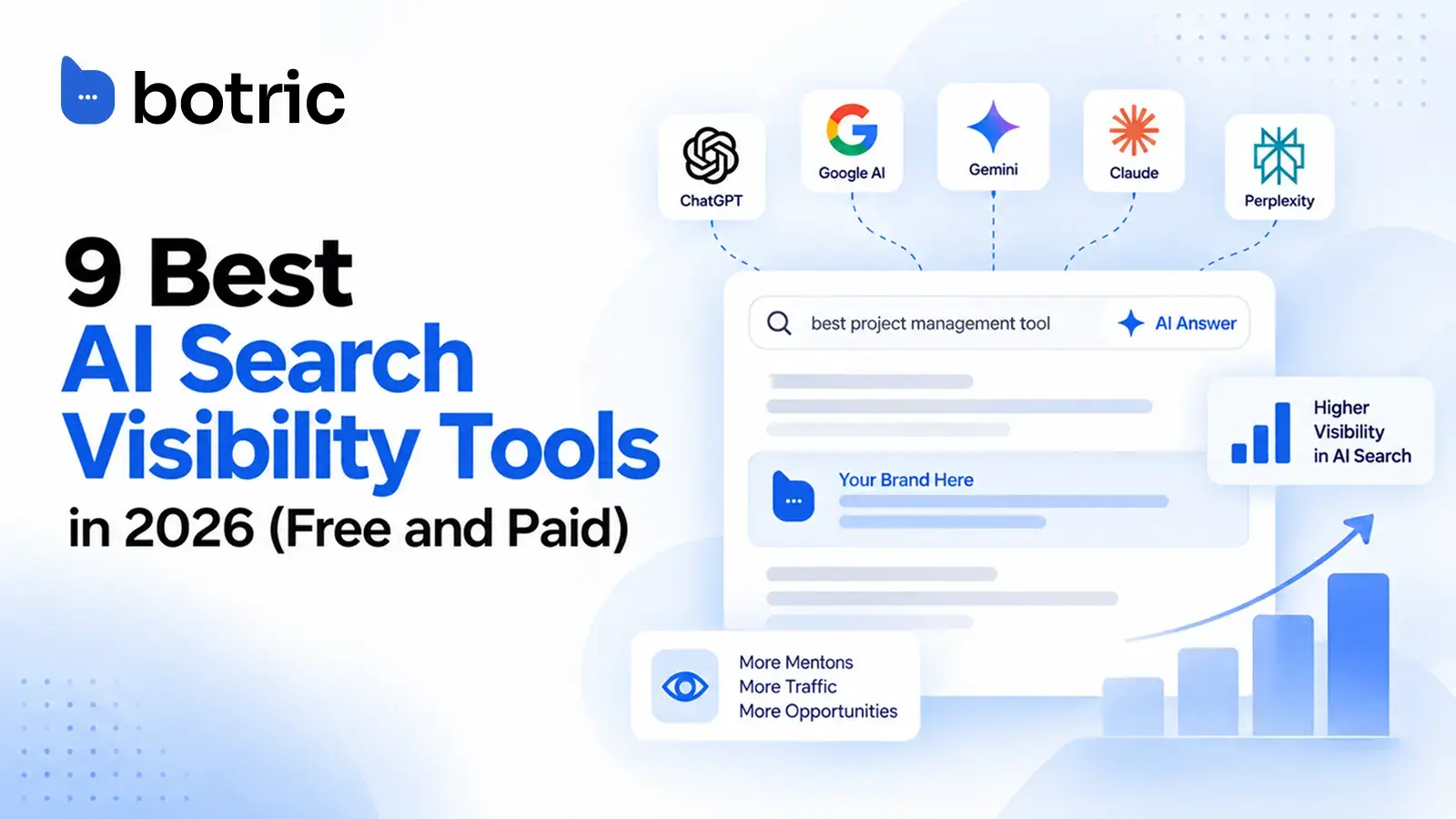
AI search is changing how people find and compare brands online. Someone might ask ChatGPT, Gemini, or Perplexity for the best company or product, but is your brand showing up in the answer?
AI search visibility tools help you see when your brand is mentioned, which competitors are showing up instead, and what sources AI platforms are using.
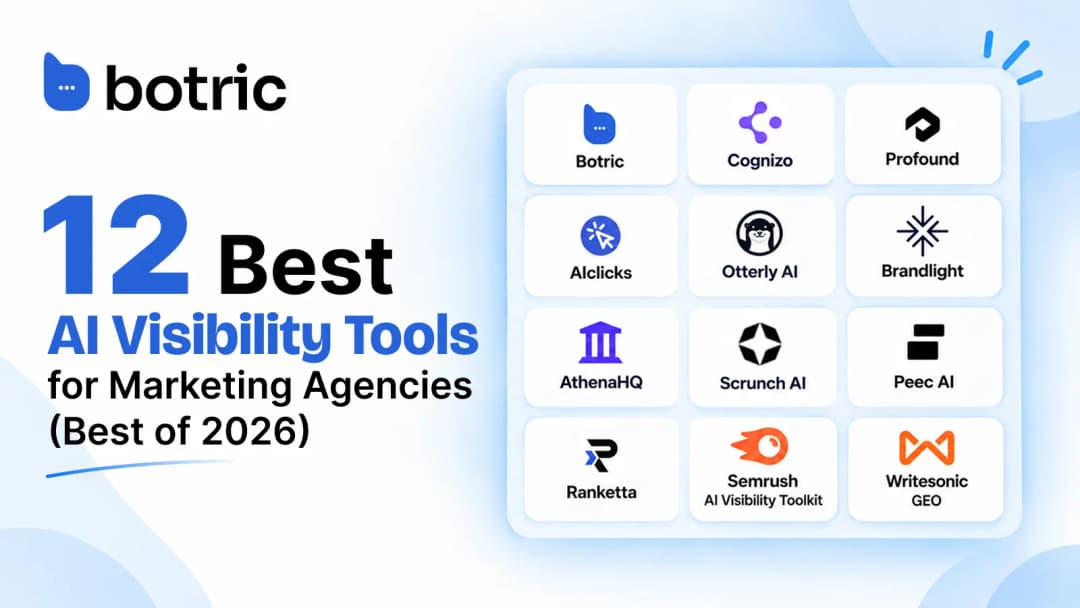
In this guide, we compare nine AI search visibility tools, including Semrush, Ahrefs, Profound, and Botric, to help you find the right one for your needs.
AI search visibility tools help you track how often your brand is mentioned, cited, or recommended in AI-generated answers across platforms like ChatGPT, Gemini, Perplexity, and Google AI Overviews.
The right choice depends on your budget, the AI platforms you want to track, and whether you only need monitoring or also want help improving your visibility.
- Best overall (monitor and improve visibility): Botric combines AI visibility tracking with GEO insights, with paid plans from $15/month (Free & 7-day free trial available on paid plans).
- Best for existing Semrush users: Semrush adds AI visibility to its SEO platform, from $199/month.
- Best for citation and source research: Ahrefs Brand Radar, from $129/month.
- Best for large brands: Profound offers enterprise AI visibility, from $99/month.
- Best for multi-engine monitoring: Peec AI suits agencies and SaaS teams, from $95/month.
- Best for smaller marketing teams: Otterly AI offers simple AI monitoring from $29/month.
- Best for GEO-focused teams: AthenaHQ has a free Essential plan, with Starter at $295/month.
- Best for AI brand representation: Scrunch AI is built for enterprise teams, from $250/month.
- Best for SEO agencies: SE Ranking combines SEO and AI reporting, from $129/month.
All 9 tools are compared in detail below, including pricing, best use cases, and limitations.
What does AI search visibility actually measure?
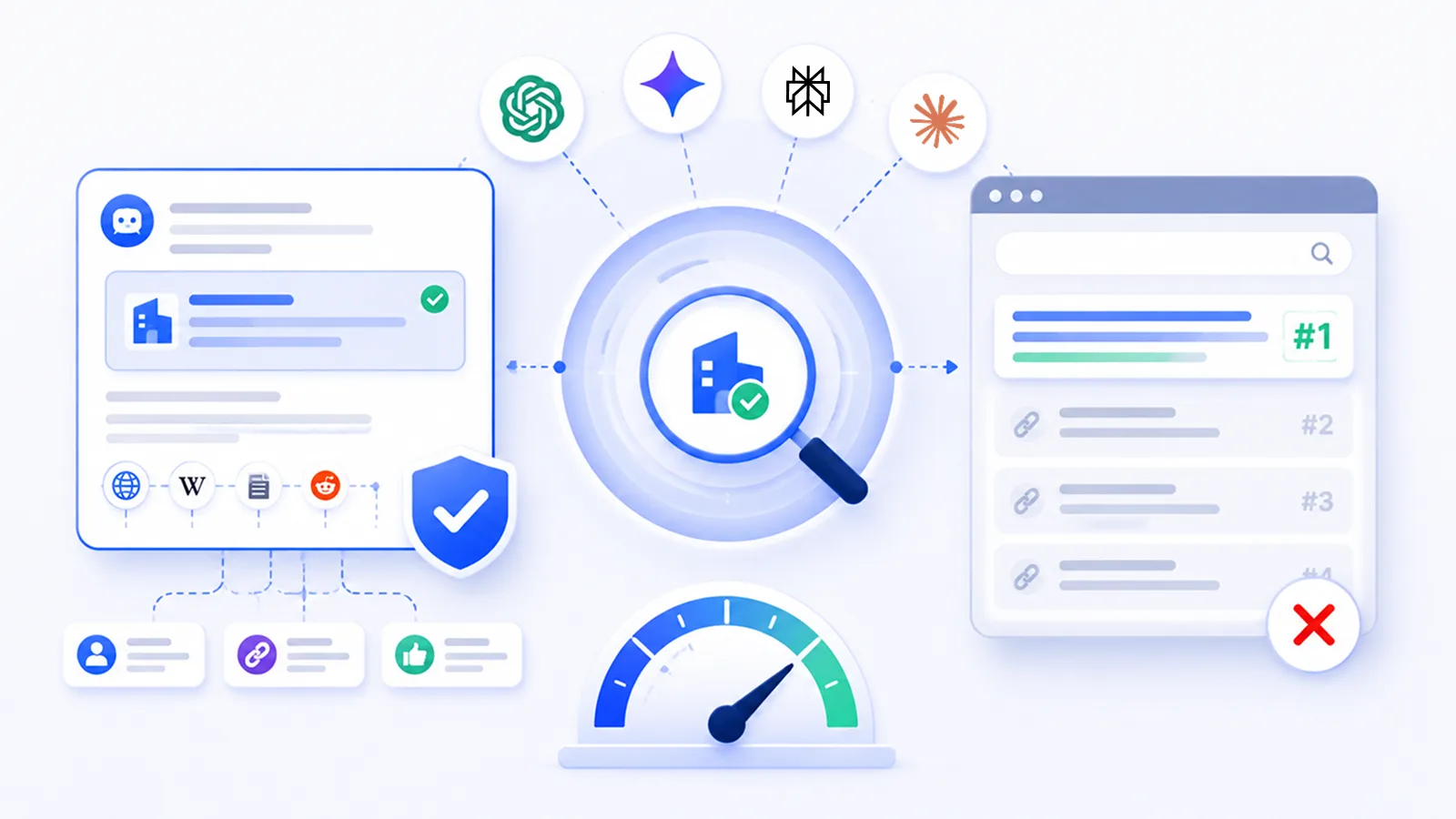
AI search visibility measures the share of AI-generated answers where your brand gets mentioned, cited or recommended across engines like ChatGPT, Perplexity, Claude, and Google's AI Overviews. This provides a different measure of visibility than traditional search rankings.
Google's AI Overview answers a query directly, often without the searcher ever clicking through to a website. A brand can hold the top organic spot for a competitive keyword and still be invisible there, because AI Overviews and other AI Models answers get generated from a synthesis of sources the model trusts, not from a ranked list it displays.
Why does AI search visibility matter nowadays?
Traditional rankings still matter, but they’re no longer the only way people discover businesses. A buyer might start by asking ChatGPT for recommendations, compare a few options in Perplexity, and then visit Google to learn more.
If your brand doesn’t appear in those early AI answers, you could miss the chance to make the buyer’s shortlist. That’s why a strong Google ranking doesn’t always mean your brand has strong AI visibility.
AI platforms can use information from many sources, including your website, review sites, comparison articles, Reddit discussions, and industry publications. A competitor may appear more often simply because AI engines are finding stronger or more trusted information about them elsewhere.
Understanding what AI search visibility actually measures helps you see where your brand appears, where competitors are getting ahead, and what you may need to improve.
9 Best AI Search Visibility Tools (Free & Paid)
AI search visibility tools all have the same basic goal: help you understand how your brand appears in AI-generated answers. But they go about it differently.
Some are traditional SEO platforms that have added AI tracking, while others are built specifically for AI search. Here’s a simple breakdown of nine options.
| Tool | Core focus | Best for | Citation tracking | Optimization support | Pricing From |
|---|---|---|---|---|---|
| Botric | AI visibility + GEO insights | Teams wanting to monitor and improve visibility | Yes | Yes | Free / $15/mo |
| Semrush | SEO + AI visibility | Existing Semrush users | Yes | Limited | $199/mo |
| Ahrefs | Citation and brand intelligence | SEO and content teams | Yes | Limited | $129/mo |
| Profound | Enterprise AI visibility | Large brands | Yes | Yes | $99/mo |
| Peec AI | Multi-engine monitoring | Agencies and SaaS teams | Yes | Limited | $95/mo |
| Otterly AI | Simple AI monitoring | Smaller marketing teams | Yes | Limited | $29/mo |
| AthenaHQ | GEO optimization | GEO-focused teams | Yes | Yes | Free / $295/mo |
| Scrunch AI | AI brand representation | Enterprise teams | Yes | Yes | $250/mo |
| SE Ranking | SEO + AI reporting | Agencies | Yes | Limited | $129/mo |
1. Botric
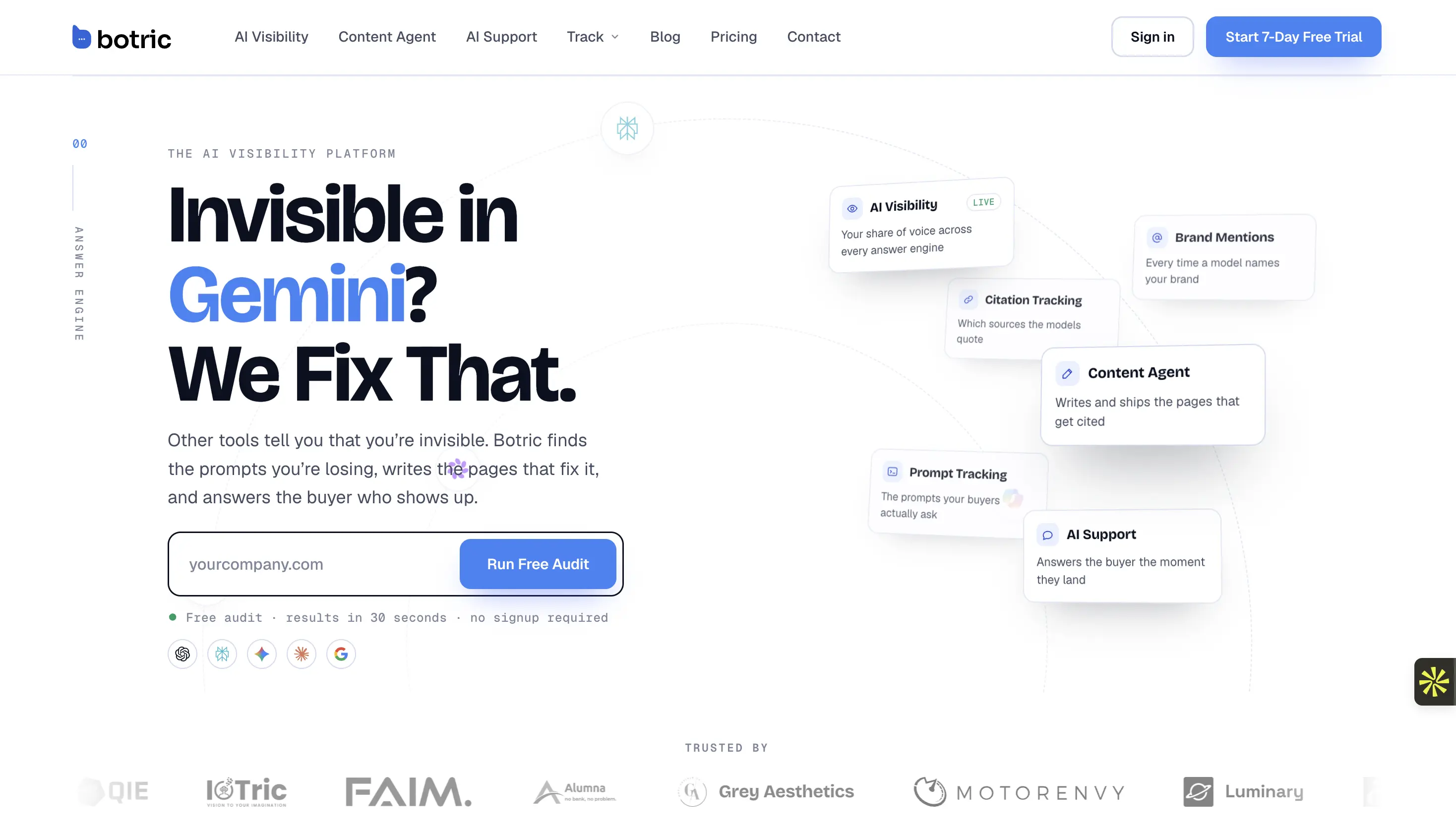
Botric is built specifically for AI search visibility and GEO. It tracks brand mentions, prompts, citations, competitors, and visibility across AI search platforms.
The platform also includes GEO and Site audits. These help teams find content and website issues that may be limiting their chances of appearing in AI-generated answers.
Botric goes beyond monitoring with AI content features. Depending on the plan, teams can generate AI-optimized blogs, track more prompts, and use Chat Agents while monitoring visibility from the same platform.
Pricing
Botric has a Free plan at $0/month with 5 tracked prompts and Site & GEO audits. Monthly pricing starts at $15/month for Bit, $49/month for Byte, and $149/month for Infinity. Botric also offers custom pricing for enterprises.
Limitation
Teams managing a very large number of brands, regions, and prompts may need the Enterprise plan or a more enterprise-heavy reporting platform.
2. Semrush
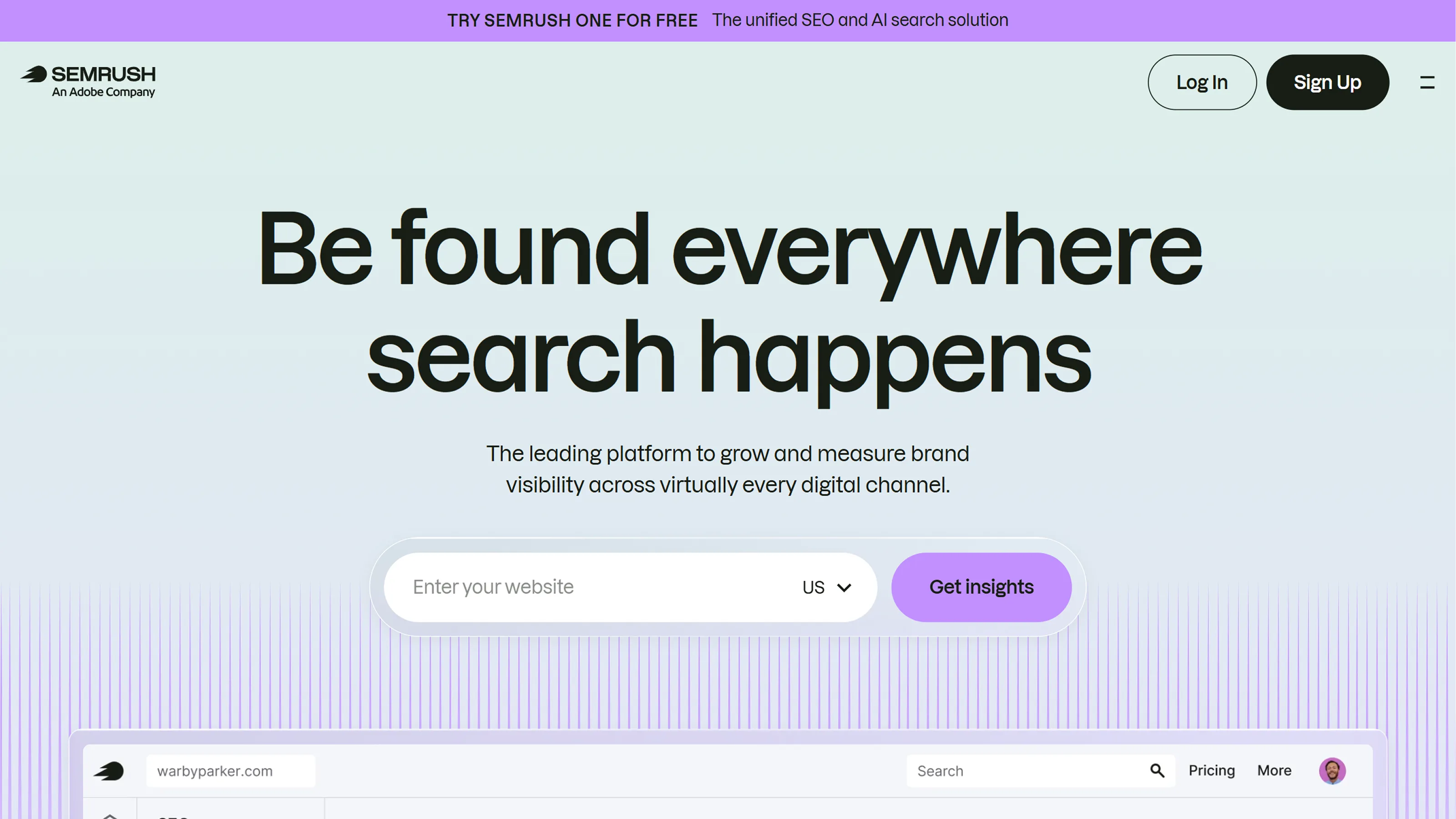
Semrush brings AI visibility into the same ecosystem many teams already use for SEO.
Its AI Visibility Toolkit tracks brand mentions across ChatGPT, Google AI, Gemini, and Perplexity. It also includes custom prompt tracking, competitor analysis, prompt research, AI-readiness auditing, and visibility reporting.
The advantage is that teams can connect AI visibility with traditional keyword, competitor, technical SEO, and content workflows instead of managing everything separately.
Pricing
Semrush offers some basic AI visibility features for free. The dedicated AI Visibility Toolkit starts at $199/month 5 domains. Semrush One, which combines SEO and AI Visibility, starts at $199/month for pro+ $299/month 15 domains and advanced $549/month 40 domains.
Limitation
AI visibility is part of a much broader marketing platform. Teams focused entirely on GEO may prefer a more specialized tool.
3. Ahrefs
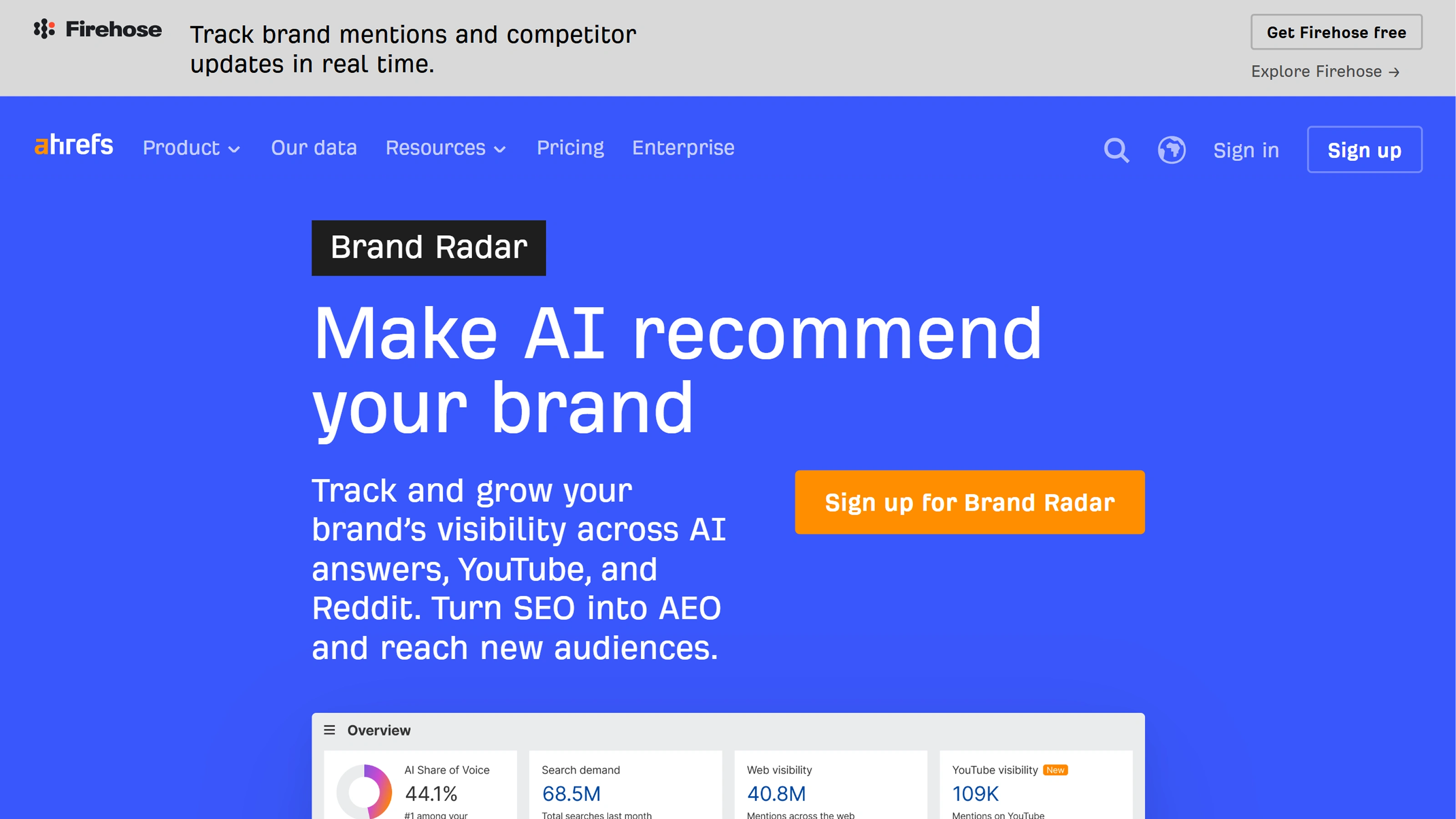
Ahrefs Brand Radar focuses heavily on understanding where brands appear across AI answers and which sources contribute to that visibility.
You can track custom buyer prompts, compare your AI share of voice with competitors, and find the pages and domains being cited in AI responses. Brand Radar covers AI platforms while also connecting visibility with channels such as SEO, Reddit, YouTube, and TikTok.
This is particularly useful when a competitor keeps appearing and you want to investigate which websites or pages may be helping them earn that visibility.
Pricing
Ahrefs offers AI visibility tracking across its paid plans. The Lite plan starts at $129/month and includes 5 projects and 5 tracked AI prompts. Standard starts at $249/month with 20 projects and 10 tracked AI prompts, while Advanced starts at $449/month with 50 projects and 20 tracked AI prompts.
Limitation
Ahrefs is strong at showing where visibility and citations are coming from, but teams may still need a separate workflow for creating and optimizing content based on those findings.
4. Profound
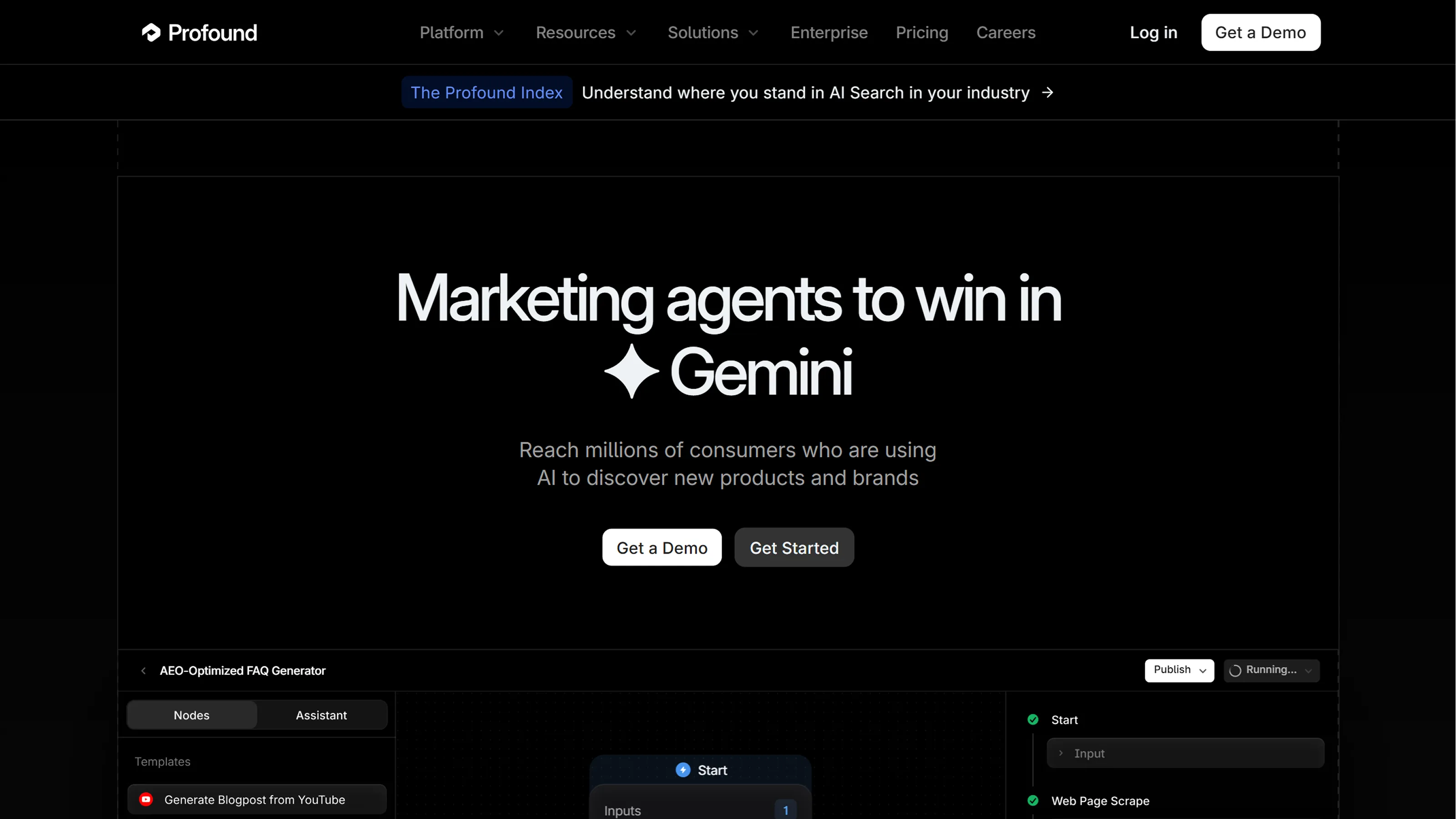
Profound is designed for brands that want deeper monitoring across answer engines.
It tracks prompts daily and analyzes brand mentions, citations, sentiment, rankings, and competitor presence. Its reporting helps teams understand how much visibility their brand owns compared with competitors.
The Growth plan also includes Profound Agents for content generation and optimization, making the platform more than a basic monitoring dashboard.
Pricing
The Profound starts at $99/month for ChatGPT tracking and 50 prompts. The Growth plan is $399/month for 3 answer engines and 100 prompts, while Enterprise pricing is custom.
Limitation
Smaller businesses may not need the depth or cost of the higher Profound plans.
5. SE Ranking
SE Ranking combines AI visibility monitoring with its traditional SEO platform.
Teams can track brand visibility and competitors while also working with keyword rankings, website audits, backlink monitoring, and SEO reporting.
That combination is useful for agencies because AI visibility can be added to existing client SEO workflows rather than managed through a completely separate reporting system.
Pricing
SE Ranking offers different subscription levels, and AI visibility features can depend on the selected plan or add-on. starts at $129/month with 10 projects, 100 daily tracked prompts, and 5 GEO research domains. The Growth plan is $279/month, offering 30 projects, 250 daily prompts, and 15 GEO research domains.
Limitation
Dedicated GEO platforms may provide deeper AI-specific diagnostics and optimization workflows.
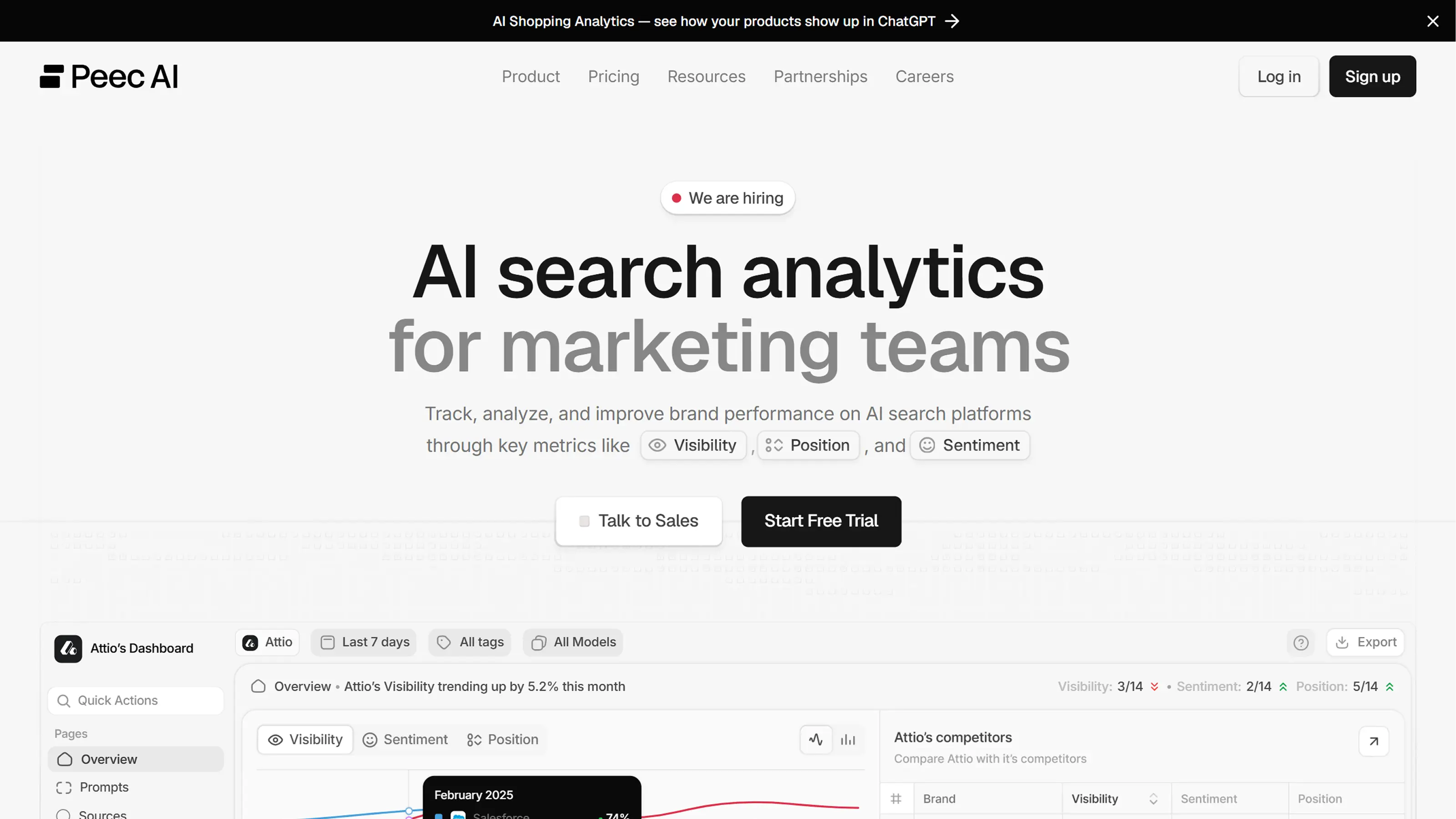
6. Peec AI
Peec AI is focused specifically on tracking how brands perform in AI search.
The platform monitors prompts, brand mentions, citations, competitors, and visibility trends across multiple AI engines. This makes it easier to see which brands are winning important buyer questions without working through a traditional SEO dashboard.
Peec AI is especially useful for agencies and marketing teams that want straightforward AI visibility reporting across multiple brands or topics.
Pricing
Peec AI uses paid plans based on the level of tracking starts at $95/month with 50 prompts and 1 project. The Pro plan is $245/month with 150 prompts, while Advanced is $495/month with 350 prompts. Enterprise pricing is custom.
Limitation
Peec AI is stronger on monitoring than on creating and publishing the content needed to close identified visibility gaps.
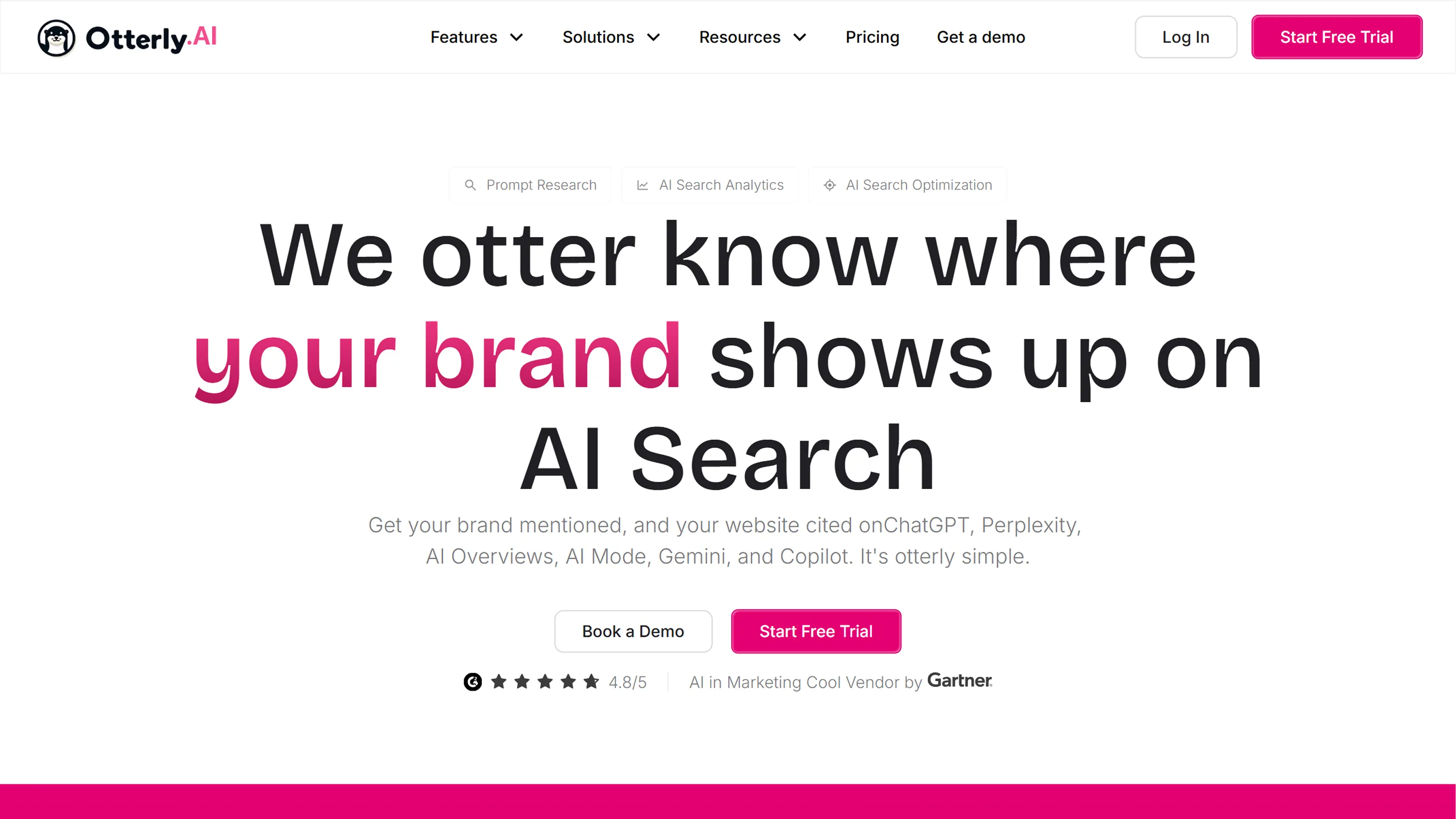
7. Otterly AI
Otterly AI provides a simpler way to monitor prompts, brand mentions, citations, and visibility across AI search engines.
Its Lite plan tracks ChatGPT, Google AI Overviews, Perplexity, and Microsoft Copilot daily. Gemini, Google AI Mode, and Claude can be added separately. Higher plans add citation analysis, GEO audits, detailed reports, API access, and additional prompts.
That makes Otterly useful for teams that want to start small and add more advanced monitoring as their AI search strategy grows.
Pricing
The monthly Lite plan starts at $29/month. Standard is $189/month, while annual billing brings those effective monthly prices down to $25 and $160 respectively. Premium is listed at $422/month on annual billing, and Enterprise pricing is custom.
Limitation
Some major AI engines require paid add-ons, so the total cost can increase if you need broader engine coverage.
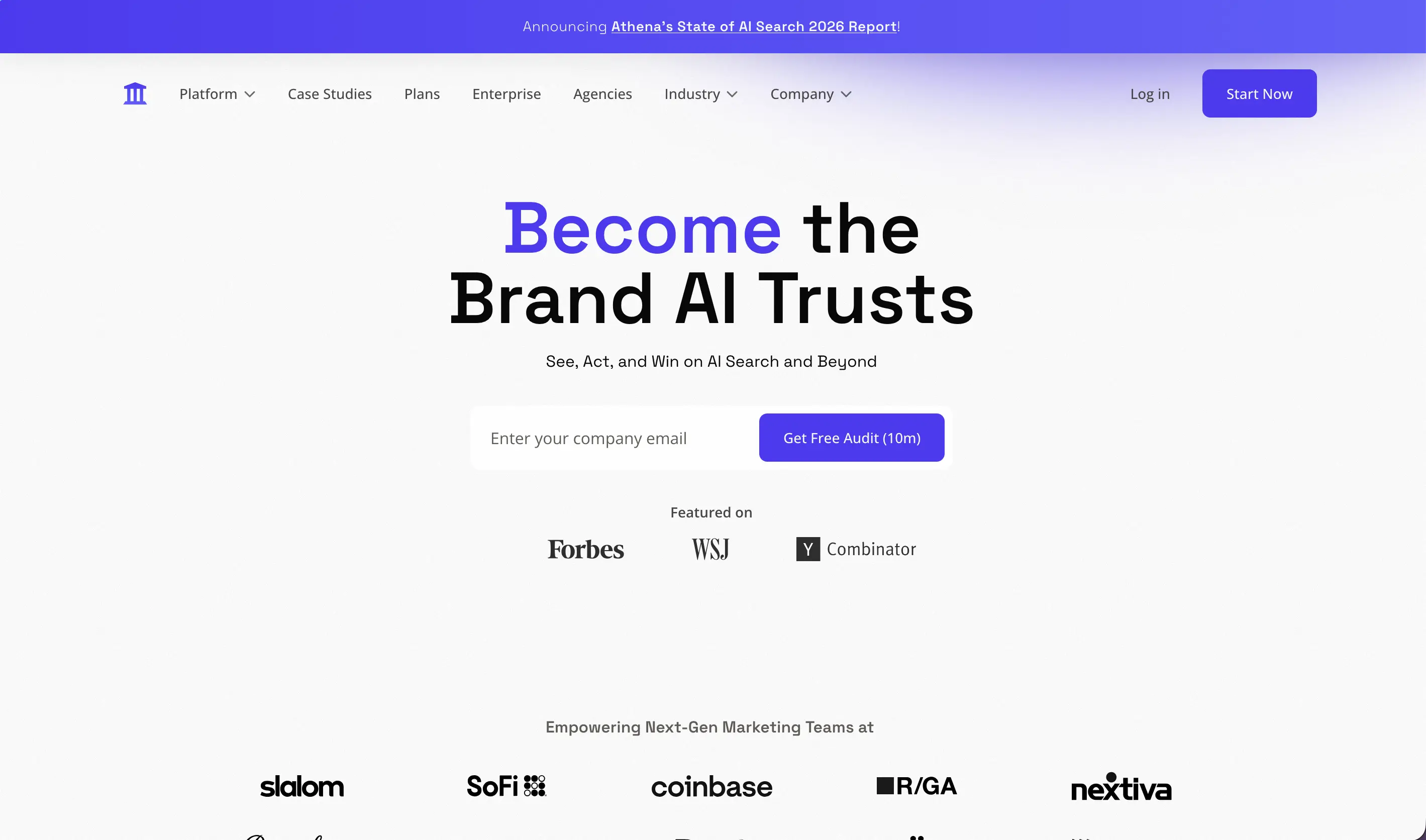
8. AthenaHQ
AthenaHQ focuses more directly on Generative Engine Optimization.
The platform helps teams monitor AI visibility, analyze prompts and competitors, study citations, and identify opportunities to improve how a brand appears across AI-generated answers.
Its GEO focus makes it more useful for teams that want to turn AI visibility data into an ongoing optimization strategy rather than simply watching mentions.
Pricing
AthenaHQ offers a free Essential plan with $25 in credits. The Starter plan is $295/month with visibility across 11 AI models and $300 in monthly credits, while Enterprise pricing is custom.
Limitation
Its GEO-focused feature set and pricing may be more than smaller teams need when compared with simpler AI visibility tools.
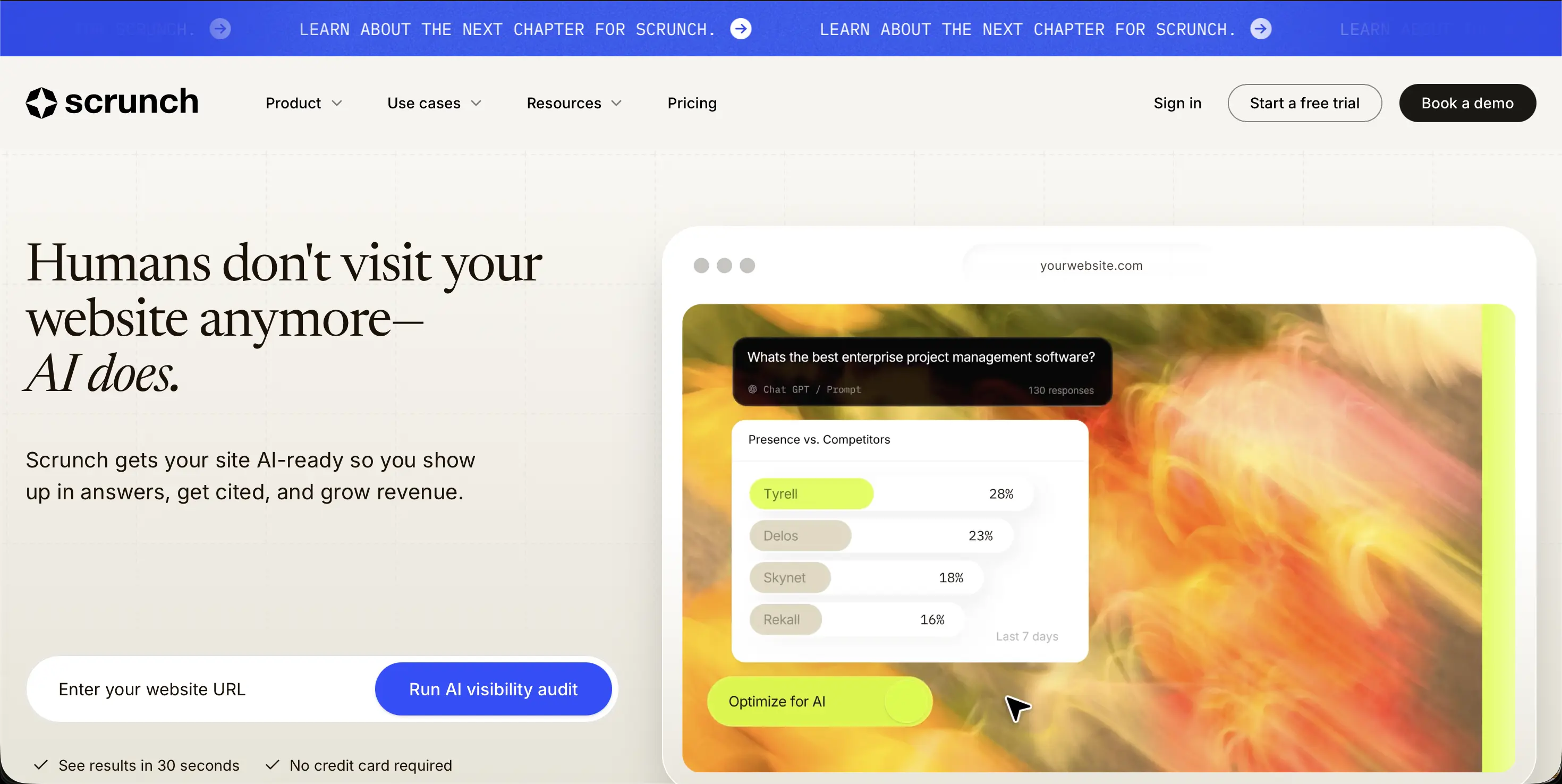
9. Scrunch AI
Scrunch AI focuses on how brands appear and are represented across AI-generated experiences.
It helps enterprise teams monitor AI visibility, understand how AI platforms describe their brand, analyze competitors, and identify areas where brand information or content needs improvement.
This is useful for large organizations because simply being mentioned isn't always enough. They also need AI platforms to understand their products, services, and brand information correctly.
Pricing
Scrunch starts at $250/month with 125 prompts, 5 monthly site audits, and tracking across 4 LLMs. The Enterprise plan offers custom pricing with expanded model coverage, API access, and custom limits.
Limitation
Smaller businesses that mainly want basic prompt and citation tracking may find the enterprise approach more than they need.
Which tool should you pick based on your team's size, budget, and GEO priorities?
Don't start by asking which tool has the longest feature list. Start with what you actually need to know.
- Solo marketer or small team: Start by finding out whether you have an AI visibility problem at all. Botric's free option can give you a baseline before you commit to another monthly tool.
- Already paying for an SEO platform: Semrush, Ahrefs, or SE Ranking may be the easiest place to start because they fit into work you're already doing.
- Moving from SEO into GEO: Citation data from Ahrefs can be useful, while Botric or AthenaHQ can help you go deeper into GEO.
- Running AI search at enterprise scale: Profound and Scrunch AI are better suited to larger teams that need to track many products, topics, or markets.
- Need straightforward AI monitoring: Peec AI and Otterly AI are worth looking at.
- Want to find problems and work on them: Botric is a stronger fit when you want monitoring, competitor insights, citation analysis, and GEO recommendations in the same workflow.
The main thing to remember is this:
A dashboard can tell you that your competitor appears in 40% of the answers you're tracking while you appear in 10%. That's useful.
But your next question will be:
Why? The tool you choose should help you get as close to that answer as possible.
What breaks when you ignore AI visibility and rely only on traditional SEO metrics?
Your SEO performance can look healthy while competitors are gaining visibility in ChatGPT and other AI answers. Traditional rank trackers won’t show when AI platforms recommend competitors instead of your brand.
AI engines also use sources beyond your website, including reviews, comparison sites, forums, and industry publications. Botric's AI visibility audit can help you see where your brand stands and what may be limiting its visibility.
Conclusion
Semrush, Ahrefs, and SE Ranking make sense for teams that want to add AI visibility to an existing SEO workflow.
Peec AI and Otterly AI are more focused on monitoring. Profound and Scrunch AI are built with larger organizations in mind. AthenaHQ focuses more closely on GEO.
Botric is designed for teams that want to connect AI visibility tracking with competitor insights, citations, GEO audits, and content opportunities.
There's no reason to choose a platform simply because it has the most features. Choose the one that answers the questions your team actually has.
First, find out where your brand appears. Then look at where competitors are beating you. And finally, work on the gaps that matter.
- Being named inside a generated answer and holding a page-one ranking are two separate outcomes, and only one of them shows up in a typical SEO dashboard.
- Semrush, Ahrefs, and Profound each bring a real strength, tight integration, citation scale, a category-defining metric, but none pair live tracking with fix recommendations the way a purpose-built platform does.
- Budget, existing stack, or a need for deeper diagnostics should drive the choice, not a side-by-side feature checklist.
- A brand's organic rankings can sit flat for months while its AI answer share erodes underneath, and dedicated tracking is what catches that before it costs pipeline.
- Run a baseline audit first if you're just getting started, then pick the tool that matches whatever gap that audit turns up.
Want to know if your brand is actually showing up in ChatGPT, Gemini, Perplexity, and other AI search engines?
Run a free AI visibility audit with Botric to see where your brand appears, which competitors are getting mentioned, and what you can improve to increase your AI visibility.
Frequently Asked Questions
Can I use multiple AI visibility tools together?
You can, and many teams run a citation-database tool like Ahrefs alongside a live-tracking platform to cross-check numbers. Duplicating spend past two tools rarely pays off, though.
How often should I check AI visibility?
Weekly works well for most brands, since AI answers shift faster than organic rankings, and a monthly check can miss a competitor gaining ground in the meantime.
Do I need to change my content strategy based on AI visibility data?
In most cases, yes. Say your visibility score shows zero citations for prompts you already rank for organically: that gap usually points to something specific and fixable, missing structured data, thin bottom-of-funnel content, or blocked AI crawlers.
Will AI visibility tracking replace organic rank tracking?
No. The two measure different things and both still matter, since organic rankings still drive click-through traffic that AI answers don't always replace.
Is a zero AI visibility score a sign something is broken technically?
Not necessarily broken, but it's worth investigating. A site can be fully functional and still score zero simply because AI crawlers are blocked, schema is missing, or the content format doesn't match what these models tend to cite.